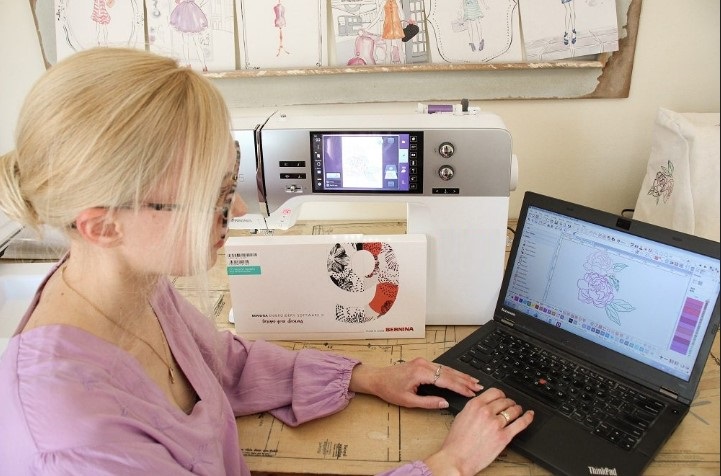
For decades, embroidery digitizing was a gatekept craft. It required years of practice to master the complex software and understand the intricate dance between thread tension, fabric pull, and stitch density. This bottleneck slowed down production, limited who could enter the field, and created a barrier between graphic designers and physical stitch-outs. Today, that landscape is undergoing a seismic shift. AI Embroidery Digitizing Software is not just another tool; it’s a revolutionary force that’s democratizing the craft, supercharging productivity, and redefining the workflow from design to production. At the heart of this change is a new, streamlined ability to Convert AI File to Embroidery Format, turning what was once a technical hurdle into a seamless, intelligent process. This isn’t about replacing the human touch; it’s about augmenting it with computational power, and the entire industry is being reshaped as a result.
From Manual Craft to Intelligent Co-Pilot: The Core Shift
The first generation of digitizing software gave users powerful tools but required them to possess all the knowledge. You had to know what pull compensation value to input and where to place underlay stitches. AI-powered software flips this model. It acts as an intelligent co-pilot that understands the why behind those decisions.
Think of it as the difference between a manual transmission and a sophisticated driver-assistance system. Both get you there, but the latter handles the complex calculations in real-time, allowing the driver to focus on navigation and strategy. AI software analyzes the vector paths, colors, and shapes in your Adobe Illustrator (.AI) file and makes thousands of micro-decisions about stitch type, sequencing, and density in seconds—decisions that would take a human digitizer hours. This fundamental shift from a tool to a partner is what’s driving industry-wide change.
Breaking Down the Bottleneck: Supercharged Efficiency & Accessibility
The most immediate and tangible impact of AI in embroidery digitizing is the dramatic compression of time and the lowering of barriers to entry.
- From Hours to Minutes: A complex logo that might have taken a skilled digitizer 2-3 hours to manually plot can now be processed by AI into a clean, sew-ready first draft in under 30 minutes. This doesn’t just speed up one job; it multiplies the capacity of studios and digitizing services, allowing them to handle more clients and faster turnaround times.
- Democratizing Design: High-quality embroidery is no longer gated solely by specialized digitizing skills. Graphic designers, small business owners, and hobbyists can now take a vector logo and generate a viable embroidery file with intuitive AI tools. This is empowering a new wave of creators and small brands to bring custom apparel ideas to life without a large upfront investment in outsourcing or training.
- Consistency at Scale: AI applies learned rules uniformly. For large corporations or franchises requiring consistent logo application across thousands of garments and multiple production facilities, AI ensures every digitized file is engineered with the same parameters, eliminating human variability and guaranteeing brand consistency.
The New Collaborative Workflow: AI Draft, Human Perfect
The industry is moving towards an optimized, collaborative workflow. The fear of AI replacing digitizers is giving way to a model of AI augmenting them.
- AI Handles the First Draft: The designer or client submits a vector .AI file. The AI software rapidly analyzes it, identifying shapes, text, and colors. It makes intelligent guesses: “This thick shape is a fill area, this thin line is a satin column.” It generates a complete stitch file, complete with a suggested stitch path and basic settings.
- The Human Becomes the Creative Director & Quality Engineer: This is where the professional digitizer’s expertise becomes more valuable, not less. They review the AI’s draft not as a blank canvas, but as a 90% complete blueprint. They focus on:
- Creative Refinement: Adjusting stitch angles for aesthetic effect, choosing specialty fill patterns, and ensuring the stitch direction complements the design’s flow.
- Advanced Problem-Solving: Handling exceptionally complex design elements, adapting the file for unconventional materials (like leather or towels), and applying artistic effects that AI hasn’t been trained on.
- Final Quality Assurance: Using their deep understanding of fabric behavior to fine-tune density for a specific jersey material or add reinforced underlay in high-stress areas the AI might have missed.
This synergy creates a “super-digitizer”—a professional who can produce a higher volume of superior work by offloading the repetitive calculations to AI.
The Direct Impact on Business Models
This technological shift is actively changing how businesses operate within the industry.
- Digitizing Services Can Scale Rapidly: Services can now handle a much higher volume of orders without a linear increase in staff. They can offer tiered pricing—a budget-friendly AI-assisted option and a premium hand-edited option—catering to a wider market.
- In-House Teams Gain Leverage: Brands with in-house embroidery can now empower their marketing or design teams to prototype ideas instantly, dramatically speeding up the sample and approval process before sending final files to production.
- The Rise of Integrated Platforms: We’re seeing the emergence of all-in-one platforms where you can upload a design, have it AI-digitized, preview it on a 3D garment mockup, and send it directly to a connected embroidery machine—all within a single ecosystem. This is streamlining the entire supply chain.
Looking Ahead: The Next Stitch in the Evolution
AI in embroidery digitizing is still in its relative infancy. The next wave of innovation will likely include:
- Predictive Fabric Analysis: AI that doesn’t just ask for the fabric type but analyzes an image of the material to predict its behavior and auto-adjust settings with incredible precision.
- Generative Embroidery Design: Moving beyond digitizing existing art, AI could generate original, stitch-optimized patterns and textures based on text prompts or style cues (“Art Deco monogram” or “watercolor floral fill”).
- Self-Optimizing Files: AI that learns from the actual sew-out data of thousands of machines, continuously refining its algorithms to produce files that run with even greater efficiency and fewer errors on specific machine models.
Conclusion: An Industry Rewoven with Intelligence
AI Embroidery Digitizing Software is fundamentally rewiring the embroidery industry. By mastering the ability to seamlessly Convert AI File to Embroidery Format, it is breaking down the historic barrier between digital design and physical thread. The result is an industry that is faster, more accessible, and more creatively potent.
The future belongs not to those who fear being replaced by automation, but to those who learn to partner with it. The digitizer, designer, and business owner who embrace AI as a co-pilot will find themselves at the forefront of a more dynamic, efficient, and innovative era of embroidery. The thread of creativity is now being guided by both human imagination and artificial intelligence, and together, they are stitching a smarter, more exciting future for the entire industry.