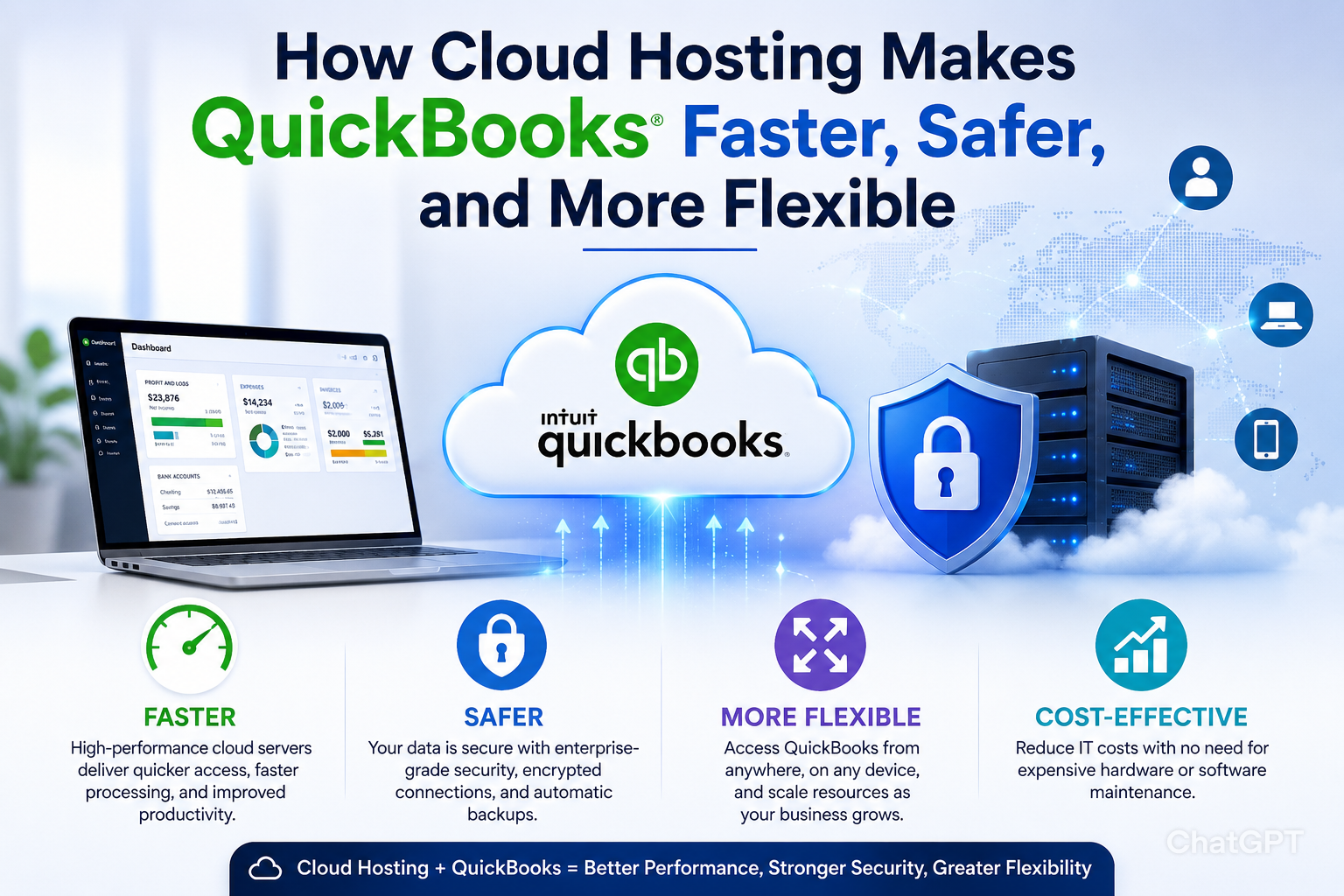
Managing business finances efficiently is essential for companies of all sizes. Many organisations rely on QuickBooks to handle accounting, payroll, invoicing, reporting, and tax preparation. However, traditional desktop installations can create limitations when teams need remote access, better security, or improved performance. This is where cloud hosting changes the game.
QuickBooks cloud hosting allows businesses to run QuickBooks on secure remote servers instead of relying on a single local computer. Users can access their accounting software from anywhere while benefiting from better speed, stronger data protection, and greater operational flexibility.
As more businesses adopt remote and hybrid work models, cloud hosting has become one of the most practical ways to modernise accounting operations. Here is how cloud hosting makes QuickBooks faster, safer, and more flexible for modern businesses.
Understanding QuickBooks Cloud Hosting
QuickBooks cloud hosting means your QuickBooks Desktop software is installed on a cloud server maintained by a hosting provider. Instead of storing accounting data on an office computer, all files and applications are hosted in a secure data centre.
Authorised users can log in through the internet using laptops, desktops, tablets, or smartphones. This setup allows teams to work on the same QuickBooks environment simultaneously without being physically present in the office.
Cloud hosting combines the familiar features of QuickBooks Desktop with the accessibility and convenience of cloud computing.
Faster Performance and Better Efficiency
One of the biggest advantages of QuickBooks cloud hosting is improved speed and performance.
High-Performance Servers
Cloud hosting providers use enterprise-grade servers designed for high-speed processing. These servers are much more powerful than standard office computers, allowing QuickBooks to run more efficiently.
Large company files, complex reports, and multi-user tasks process faster in a hosted environment. Businesses dealing with heavy accounting workloads benefit from smoother operations and reduced lag.
Reduced Downtime
Traditional office systems are vulnerable to hardware failures, local network issues, and power outages. If the main computer crashes, accounting work may stop completely.
Cloud hosting reduces downtime because data and applications are stored in professional data centers with backup systems, redundant internet connections, and continuous monitoring. This ensures QuickBooks remains available even during technical problems.
Multi-User Collaboration Without Slowdowns
In traditional setups, multiple users accessing the same QuickBooks file may experience performance issues. Cloud hosting is designed to support simultaneous users more efficiently.
Accountants, bookkeepers, payroll staff, and business owners can work together in real time without significant slowdowns. This improves productivity and eliminates delays caused by file-sharing limitations.
Faster Updates and Maintenance
Cloud hosting providers often handle server maintenance, software updates, and system optimisation. Businesses no longer need to spend time managing upgrades manually.
This reduces IT workload and ensures QuickBooks operates on optimised systems with the latest security patches and performance improvements.
Enhanced Security for Financial Data
Financial information is one of the most sensitive assets a business owns. Protecting accounting records from cyber threats, data loss, and unauthorised access is critical.
QuickBooks cloud hosting offers stronger security compared to many traditional office setups.
Advanced Data Encryption
Hosted QuickBooks environments use encryption technologies to protect data during transmission and storage. Encryption helps prevent hackers from intercepting sensitive financial information.
This means invoices, payroll records, tax details, and customer information remain secure when employees access QuickBooks remotely.
Secure Data Centers
Professional hosting providers operate secure data centres with strict physical and digital security measures. These facilities often include:
- 24/7 monitoring
- Fire suppression systems
- Biometric access controls
- Redundant power supplies
- Environmental controls
Such infrastructure provides far greater protection than storing accounting data on a local office computer.
Automatic Backups
Data loss can happen because of accidental deletion, ransomware attacks, hardware failure, or natural disasters. Cloud hosting providers typically perform automatic backups to ensure business data can be restored quickly.
Regular backups reduce the risk of losing critical accounting information and help businesses recover faster from unexpected incidents.
Multi-Factor Authentication
Many cloud hosting platforms support multi-factor authentication (MFA), adding another layer of protection. Users must verify their identity through additional methods, such as mobile verification codes.
This significantly reduces the risk of unauthorised access, even if passwords are compromised.
Protection Against Local Threats
Local computers are vulnerable to theft, hardware damage, and malware infections. Since hosted QuickBooks data is stored remotely, businesses remain protected even if office devices are lost or damaged.
Employees can simply log in from another device and continue working without major disruption.
Greater Flexibility for Modern Work Environments
Flexibility has become essential in today’s business world. Cloud hosting helps organisations adapt to changing work models and operational needs.
Access QuickBooks From Anywhere
One of the biggest benefits of cloud hosting is remote accessibility. Users can access QuickBooks from virtually any location with an internet connection.
This is especially useful for:
- Remote employees
- Traveling executives
- Accountants working from home
- Multi-location businesses
- Field teams needing financial access
Business owners no longer need to be tied to a single office computer.
Compatibility Across Devices
Hosted QuickBooks can be accessed through different devices, including:
- Windows PCs
- Macs
- Tablets
- Smartphones
This flexibility allows users to manage accounting tasks on the go without sacrificing productivity.
Easier Collaboration With Accountants
Businesses often work closely with external accountants, tax professionals, and financial advisors. Cloud hosting makes collaboration easier because authorised professionals can securely access the same QuickBooks environment remotely.
There is no need to email files back and forth or worry about version conflicts.
Scalability for Growing Businesses
As businesses expand, their accounting needs also grow. Cloud hosting allows companies to scale resources more easily.
Businesses can add users, increase storage capacity, or upgrade server resources without investing in expensive new hardware. This flexibility supports long-term growth while keeping IT costs manageable.
Support for Hybrid Work Models
Many businesses now operate with hybrid work environments where employees split time between office and remote locations.
QuickBooks cloud hosting supports this model by ensuring all users have consistent access to the same accounting system from anywhere.
Cost Savings and Operational Benefits
In addition to speed, security, and flexibility, cloud hosting can also improve overall cost efficiency.
Reduced Hardware Costs
Traditional QuickBooks setups may require businesses to purchase expensive servers and maintain local infrastructure. Cloud hosting eliminates much of this hardware burden.
Businesses can reduce spending on:
- Server purchases
- IT maintenance
- Hardware upgrades
- On-site storage systems
Lower IT Management Requirements
Hosting providers typically manage server maintenance, updates, backups, and monitoring. This reduces the need for extensive in-house IT support.
Small and medium-sized businesses especially benefit from lower technical management responsibilities.
Improved Business Continuity
Unexpected events such as natural disasters, office closures, or equipment failures can disrupt operations. Cloud hosting improves business continuity by allowing employees to continue working remotely with secure access to QuickBooks.
This resilience helps businesses maintain productivity during emergencies.
Why Businesses Are Moving to Hosted QuickBooks
The shift toward cloud technology continues to accelerate across industries. Businesses want accounting systems that support mobility, collaboration, security, and efficiency.
Hosted QuickBooks addresses many of the challenges associated with traditional desktop setups. Companies are increasingly choosing cloud hosting because it provides the following:
- Better remote access
- Stronger cybersecurity
- Reliable backups
- Faster performance
- Easier collaboration
- Greater operational flexibility
Whether for small businesses, accounting firms, or growing enterprises, cloud hosting creates a more modern and scalable accounting environment.
Choosing the Right QuickBooks Hosting Provider
Not all hosting providers offer the same level of service. Businesses should evaluate several factors before selecting a provider.
Key Features to Look For
A reliable QuickBooks hosting provider should offer the following:
- High uptime guarantees
- Strong security protocols
- Automatic backups
- Multi-user support
- Responsive customer support
- Scalable hosting plans
- Data center certifications
Choosing an experienced provider helps ensure stable performance and long-term reliability.
Consider Industry Experience
Providers with experience hosting QuickBooks environments understand the software’s technical requirements better. This can lead to smoother implementation and better ongoing support.
Businesses should also review customer testimonials, service agreements, and security standards before making a decision.
Final Thoughts
QuickBooks cloud hosting offers a smarter way for businesses to manage accounting operations in today’s digital environment. By moving QuickBooks to the cloud, companies gain faster performance, enhanced data security, and the flexibility to work from anywhere.
Cloud hosting also improves collaboration, reduces hardware dependency, and supports business continuity during unexpected disruptions. As remote work and digital operations continue to grow, hosted QuickBooks solutions provide businesses with the tools needed to stay productive and competitive.
For organisations looking to modernise their accounting systems while maintaining the familiar QuickBooks Desktop experience, cloud hosting delivers a practical and future-ready solution.